
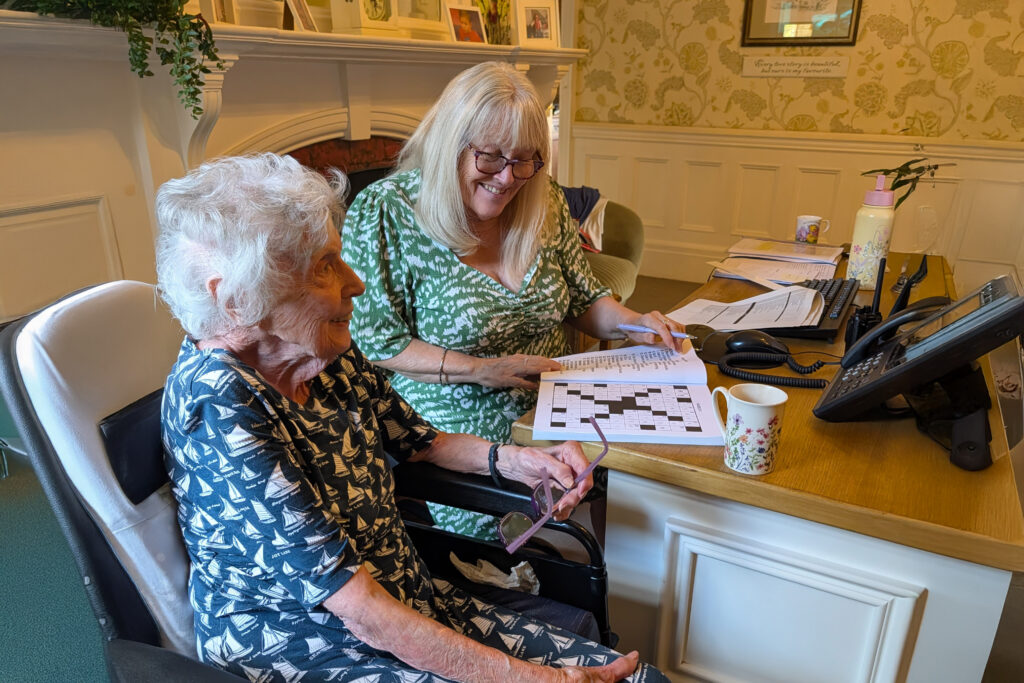
They say a picture speaks a thousand words. This photo that I captured in our care home does exactly that for me. It shows Zena, our receptionist, sitting alongside Anne, one of our residents, working on a crossword together. At first glance, there’s nothing particularly remarkable about it. Two people doing a crossword at a desk. But look a little closer and I think it says a lot about what we mean when we talk about creating a home-like environment. There’s the large-print crossword, making sure Anne can participate. There’s the tea, and the relaxed way they’re sitting alongside one another. There’s a housekeeping order form in the background, waiting to be dealt with because, for that moment, Zena has her priorities in check. And behind them are family photographs, not carefully arranged as part of a show home, but simply part of the environment in which people live.
It is a place of work. But it is also a home. And for Anne, that distinction matters. Anne had previously lived in another care home and had been asked to leave. When she came to us, the challenge wasn’t simply to provide her with somewhere safe to live and ensure that her care needs were met. It was to create somewhere that she could actually feel at home. That’s a very different proposition.
I think we sometimes talk about “homeliness” in care homes as though it is primarily about the physical environment. Comfortable chairs. Pictures on the walls. Lamps instead of clinical lighting. Artwork on the walls. Familiar objects. Perhaps some flowers, books and photographs. All of these things matter. But a care home can look aesthetically pleasing without actually feeling like home. Because home isn’t really a collection of objects. It’s a feeling. It’s knowing that you belong. It’s being able to sit down with someone over a cup of tea without there needing to be a reason. It’s having relationships that aren’t defined solely by the task that needs to be completed. It’s feeling that the people around you are interested in you, rather than simply responsible for you. And that is where I think the philosophy behind the Butterfly & Dragonfly Approaches becomes so important.
The environment we create isn’t just something for residents to look at. It shapes the way we relate to them. If we think of a care home primarily as a workplace, residents can easily become the people we are there to “do things for”. If we think of it as a home, the relationships become different. We sit alongside rather than standing over. We have conversations rather than simply asking questions. We share experiences rather than simply providing activities. We get to know people as people, rather than defining them by their care needs. And sometimes, the difference that creates is enormous.
The photograph of Zena and Anne is a lovely example. But what makes it particularly poignant to me is knowing that this is Anne’s reality now. The woman who once found herself unable to remain in another care home is sitting in ours, drinking tea, doing a crossword with a member of our reception team. Nobody has arranged this moment for a photograph. Nobody has put the crossword there simply as a prop. Zena isn’t “doing an activity with a resident”. They’re simply spending time together. That distinction matters.
Much of what we celebrate in residential care is rightly visible: parties, trips out, birthdays, entertainment, celebrations and all the wonderful moments that make great photographs. But some of the most important things that happen in a care home are almost invisible. A resident choosing to sit with a member of staff. Someone who has previously resisted care beginning to trust the people helping them. A person who has struggled to settle beginning to laugh and be at ease. A team member knowing when to put their paperwork down because someone needs company more than they need a task completed. These aren’t things that can easily be captured in a brochure. But they can profoundly change someone’s experience of living in care.
For me, that’s the difference between creating a care home that looks homely and creating one that feels like home. And perhaps that’s why this photograph means so much to me. It isn’t really a photograph of a receptionist and a resident doing a crossword. It’s a small glimpse of the belonging that our care culture creates. And sometimes, the smallest glimpses tell us the most.
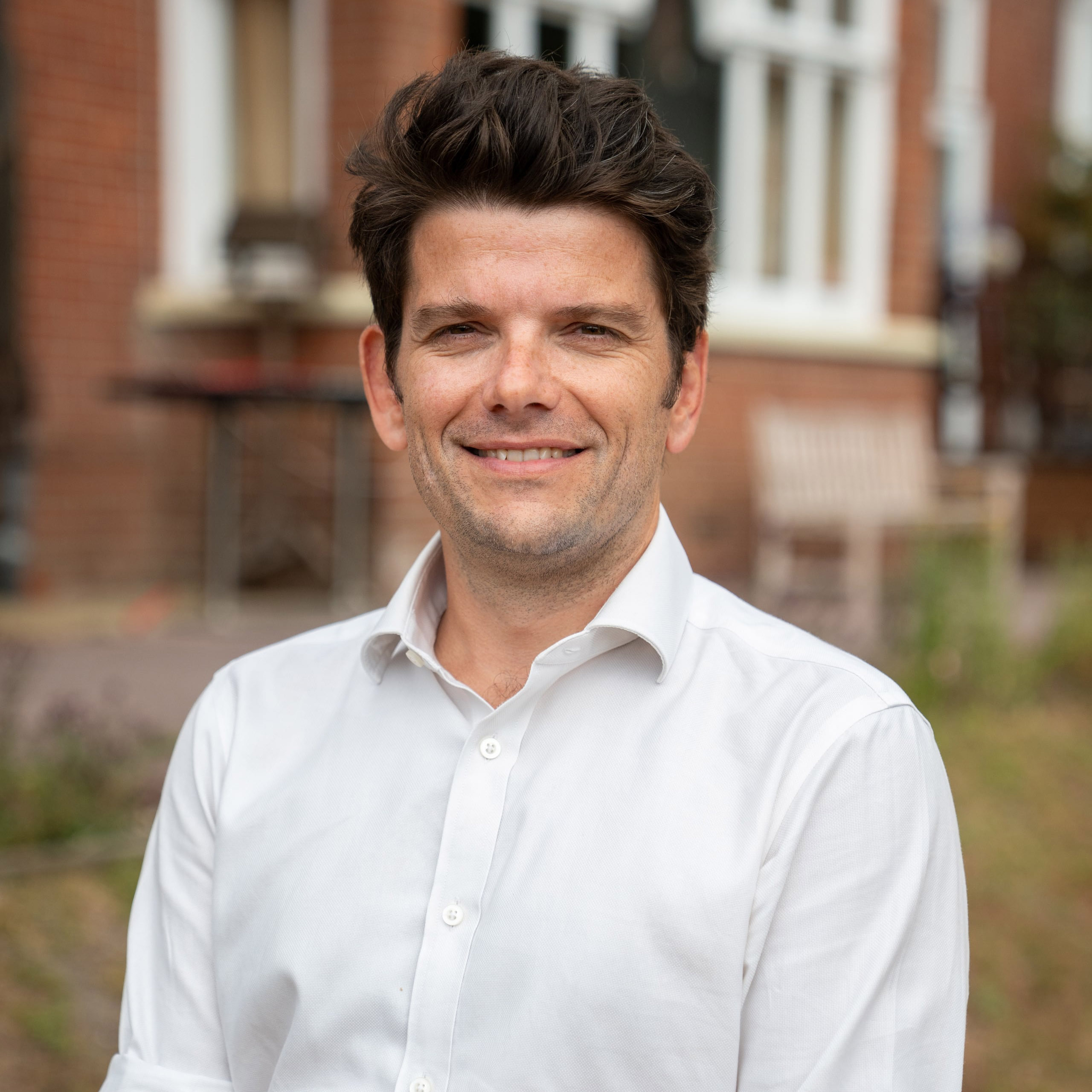
Managing Director, the Huntington and Langham Estate in Surrey, England
with one Dragonfly and one Butterfly Accredited home.