
In long-term care, team members carry more than schedules, medications, and care plans. They carry stories. They witness loss, resilience, loneliness, recovery, and the quiet emotional weight that comes with caring deeply for others every day.
Many long-term care workers experience what is known as moral distress — the emotional and psychological strain that occurs when people know the compassionate action they want to take, but circumstances, systems, time pressures, or resources make it difficult to provide care in the way they believe residents deserve.
Moral distress can look different for everyone. Sometimes it feels like exhaustion that sleep does not fix. Sometimes it appears as frustration, grief, numbness, or disconnection. Over time, it can affect workplace culture, relationships, and a person’s sense of purpose.
Yet within these same care environments, healing can begin in surprisingly simple ways.
Creating Space for Humanity
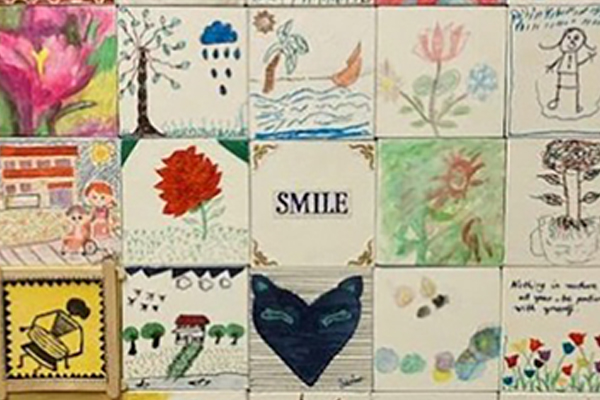
Our team recently introduced a creative community art project using paint, art supplies, and small 4×4 canvases. At first glance, it may seem like a modest activity. But the impact has been much deeper than expected. The initiative was started in Eatonville Care Centre, part of the Kindera Living, LTC group in Ontario, Canada, and now Anson Place Care Centre and other communities are also introducing this approach.
Each participant — team member, resident, volunteer, family member, or community partner — is invited to paint a small canvas square. There are no rules about artistic ability. Some people paint flowers, landscapes, hearts, or abstract colours. Others add meaningful words, symbols, or memories.
Every canvas tells a story.
Individually, the squares are personal expressions. Together, they form a collective quilt — a visual representation of connection, compassion, and shared experience within the long-term care community.
Art as a Response to Moral Distress
Creative expression offers something many healthcare environments struggle to provide: the importance of ‘pause.’
Painting allows team members to slow down, reflect, and reconnect with themselves and one another. In the process, conversations naturally emerge. People share memories, laugh together, sit quietly, or simply enjoy creating without expectation.
The project reminds team members that they are more than their workload. They are individuals with creativity, emotion, and value beyond task completion.
Importantly, the quilt also creates visibility. Moral distress is often invisible. Art gives people a way to express feelings that may be difficult to articulate in words.
A painted square may represent hope, grief, gratitude, resilience, or healing. No explanation is necessary. The act of contributing becomes meaningful in itself.
Building Community One Square at a Time
What began as an art activity has become something larger: a community-building experience.
Team members create side by side. Departments connect with one another in new ways. Community members become part of the story.
As the canvases come together, so does a stronger sense of belonging.
The finished quilt is not only artwork — it is evidence that every person matters. Every contribution has a place. Every square is different, yet essential to the whole.
The Importance of Creative Wellness in Healthcare
Supporting team member wellness requires more than policies and programs. It also requires opportunities for meaning, connection, and expression.
Creative initiatives such as collaborative art projects can:
- reduce stress and emotional fatigue
- encourage reflection and mindfulness
- strengthen team relationships
- promote psychological safety
- foster inclusion and belonging
- reconnect people to purpose and joy
Most importantly, they help humanize the workplace.
Healthcare workers spend their days caring for others. They also deserve spaces where they themselves feel seen, supported, and valued.
More Than a Quilt
The beauty of this project is that the quilt continues to grow.
With every new canvas, another person becomes part of the community. Another voice is included. Another story is acknowledged.
The finished piece will hang as a reminder that care is never provided by one person alone. It is created collectively — through compassion, teamwork, creativity, and shared humanity.
In the midst of moral distress, small acts of creativity can become acts of healing.
Sometimes community is not built through grand gestures.
Sometimes it is built one painted square at a time.
Sandy Croley – Kindera Living